Sometimes a career stops fitting long before the ambition behind it fades. Children arrive, a role is made redundant, the family relocates or an injury makes familiar work impossible. The challenge is finding meaningful work without pretending that life has stayed the same.
Part of the pressure comes from picturing progress as one unbroken path. When hours, location or earning needs change, that picture hides the choices still available and makes a change of direction feel like failure, when it is really an adjustment.
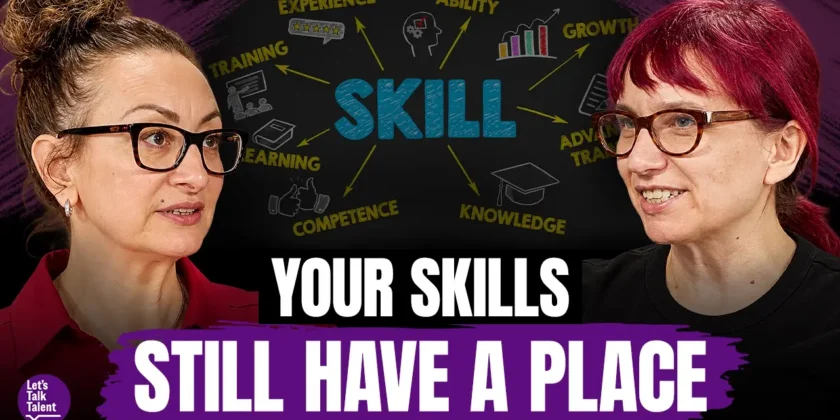
Amanda Austin, Regional Administrative Manager – UAE at Let’s Talk Talent, shared a career that has taken her from hotel management training to events, personal assistant work and 14 years running a nail business, which she rebuilt from scratch in Qatar and then Dubai. Her two daughters’ early careers show the same willingness to adapt.
This article follows that story through four lessons: designing work around current responsibilities, being honest about risk, leaning on support when things get hard and keeping a long-term ambition alive while earning a living.
In this guide we discuss:
- How to reinvent your career to fit your lifestyle
- How to weigh up the opportunities and risks of a career change
- How to build a support network when changing careers
- How to stay ambitious while exploring different career paths
Start career reinvention with the life a role must fit
Career reinvention is not always about chasing a bigger title. Sometimes the deciding question is simpler: will this role let someone work, look after their family and still have a life outside both?

“I was really trying to think, what am I going to do that fits around two children? … Then I retrained as a nail technician, which would fit in amongst school runs and looking after a little one.”
Start with the practical constraints
For Amanda, retraining as a nail technician was a deliberate answer to having two young children. Appointments could fit around the school run, and evening clients could be booked when her husband was home. She started with what her life needed, then found work she enjoyed that could fit inside it.
Keep earlier experience in view
Before that, she had worked in events, as a personal assistant and on a school reception desk. None of it formed a neat career ladder, but all of it was experience she could still draw on. A new direction does not mean writing off previous work just because the next job has a different title.
Revisit the fit when life changes again
After 14 years, a hand injury ended her nail work. Her next step was a flexible role that let work sit alongside home life and her other interests. A job that suits one stage of life is not a permanent answer, and it is worth checking again whenever circumstances shift.
Before committing to a new direction, it helps to be specific about four things:
- Time: how many hours are realistically available for paid work?
- Care: which responsibilities shape the weekly schedule?
- Health: are there physical limits the role needs to respect?
- Interest: what does the work need to give back?
Answering these turns “flexible” from an appealing label into something concrete.
Judge a new opportunity against the risks it carries
Being willing to try something new matters, but courage does not make uncertainty disappear. A good decision separates an appealing opportunity from the financial, practical and family conditions that make taking it possible.

Know the difference between a plan and a leap of faith
Amanda’s move into nail work was a planned decision. Taking the business abroad was far less certain, and she had no way of knowing whether it would work in a new country. Both were changes, but they carried very different levels of risk, so it pays to be clear about what is known and what still needs testing.
Be honest about the safety net
Her husband’s salary covered the household, so an unpredictable business income did not put the family’s security at stake. That context matters. Encouraging people to take a chance should not hide the financial support that makes a particular chance manageable, and being open about it makes a story like this more useful to others.
Check the practical barriers
Rebuilding the business also meant tracking down a specific nail product that was not sold locally at the time. Demand for a service is only one part of making it work. A move abroad can mean rethinking supplies and working arrangements, not simply restarting an established business as it was.
Questions to ask before taking the leap:
- What income does the household depend on?
- What support is there if the new venture is slow to pay?
- Which products, tools or resources are essential, and can they be sourced?
- Which family commitments will the change affect?
The aim is not to remove every uncertainty. It is to see the risk clearly enough that confidence is not the only thing a decision rests on.
Build resilience around support, not persistence alone
Persistence is only part of getting through disruption. When work or family plans become uncertain, the people and resources around a household shape whether carrying on is realistic, or whether the plan needs to change.

Look beyond individual bravery
During Covid, Amanda’s family faced redundancies and upheaval, and there were times when moving back home looked likely. Her husband’s network helped them through. Telling the story as pure determination would leave out a support system the family genuinely relied on.
Weigh staying as carefully as leaving
Leaving was especially hard because both children were at critical points in their education. Staying was the right call for that family at that time, not a rule for everyone. Deciding whether to carry on means weighing what leaving would disrupt as well as what staying would demand.
Keep persistence separate from certainty
Working through a hard period with support is different from pushing on without a workable plan, and a good outcome does not make every similar risk sensible. Real resilience includes knowing what a decision depends on and looking at it again when work, money or family needs change.
“Through Covid, we had no choice because the girls were at critical points in their education. We had to find a way through.”
When times get tough, four questions help keep persistence grounded:
- What support is genuinely available?
- What would carrying on require?
- What would leaving disrupt?
- What change in circumstances would mean looking at this again?
The lesson is not to endure at any cost. It is to understand the support and commitments that make carrying on a real choice.
Keep ambition alive without insisting on one route
The next generation of Amanda’s family shows the same flexibility. A long-term ambition and the work available today do not always match, but a different job can meet an immediate need while the bigger goal stays open, as long as the two are not confused.

Keep the goal, reconsider the route
Amanda’s younger daughter had planned to become an orthopaedic surgeon but did not get the grades she needed. On her own initiative, she found another way into medicine: a paramedic apprenticeship. When the episode was recorded, that was still a goal in progress, but it showed how a setback can redirect an ambition without ending it.
Let today’s work fund tomorrow’s aim
While waiting for an apprenticeship place, she combined acting with a job at McDonald’s, which brought in steady money alongside less predictable acting work. The job was never meant to be the final destination. It paid the bills while she kept working towards the longer-term goal.
Give it a go
Her elder daughter trained as a professional dancer. When dance work in Dubai proved highly competitive, she moved into cabin crew work with Emirates. She credits watching her mother’s varied career with giving her the confidence to try something different. The point is not that every attempt succeeds, but that being willing to try opens doors.
“Don’t be afraid to give it a go. If it doesn’t work, go back to the drawing board, but give it a go. Don’t give up without having tried.”
Amanda Austin
When current work and long-term ambition do not match, it helps to be clear about:
- What long-term goal am I still working towards?
- What work is available in the meantime?
- How much income do I need day to day?
- Which other routes into the same goal are worth exploring?
Seen this way, a stopgap job is neither a failed ambition nor a guaranteed stepping stone. It is simply work doing what it needs to do for now.
Conclusion
A changing career does not have to mean giving up on ambition. More often it means reshaping work around circumstances that cannot be ignored, while staying open to what else might be possible.
Amanda’s story offers four practical lessons. Start with fit, giving hours, caring responsibilities, health and interests a real place in the decision. Be honest about risk, including the financial support and resources that make a change manageable. Recognise the part support plays, while weighing persistence against what the family needs. And keep the long-term goal in sight, even when the route to it changes.
If a familiar role no longer fits, start by writing down what has changed and what work now needs to provide. Comparing your options against that list is a better basis for a next move than waiting for a perfect lifelong plan.
FAQs
What does career reinvention mean?
It means changing the direction or form of work as circumstances, interests or opportunities change. That might involve retraining, a different role or a new working arrangement.
Is it too late to change career after years in one job?
No. Amanda retrained after starting a family and changed direction again after 14 years in nail work. Earlier experience still counts, even when the next role needs new skills.
Does changing direction mean starting from scratch?
Not necessarily. Earlier roles remain part of someone’s experience, even when the next opportunity needs new training or has a different title.
How can work fit around caring responsibilities?
Start with the hours and responsibilities that shape availability, then check whether a role’s actual working arrangements fit around them.
What should be checked before taking a career risk?
Look at essential household income, available support, practical resources and family commitments. Together they show whether an attractive opportunity is also a manageable one.
Can a stopgap job support a longer-term ambition?
Yes. A current role can provide income while another route is explored, even though it cannot guarantee the longer-term goal will be reached.